Turning the bow of a sailboat through the wind, so the wind comes from the other side, and the name for the side the wind is on.
To tack is to turn a sailboat's bow through the wind until the wind comes from the other side and the sails fill again on the new side. It's how a boat makes progress upwind: since no boat can sail straight into the wind, it zigzags toward it, tack after tack. This is called beating.
Two meanings
- The manoeuvre. "We tacked off the headland." Many yachts turn roughly 90° from close-hauled on one side to close-hauled on the other.
- The side. A boat is on starboard tack when the wind comes over its starboard side, and on port tack when it comes over port. This matters for the right of way: port tack gives way to starboard tack.
The commands
- "Ready about!" The crew prepares the sheets.
- "Lee-oh!" (or "Helm's a-lee!"). The helm turns the boat through the wind, the old jib sheet is released and the new one hauled in.
The mainsail usually looks after itself. Compared with a gybe a tack is the calmer manoeuvre, because the boom swings across while the sails are depowered head to wind. More in the guide tack vs gybe.
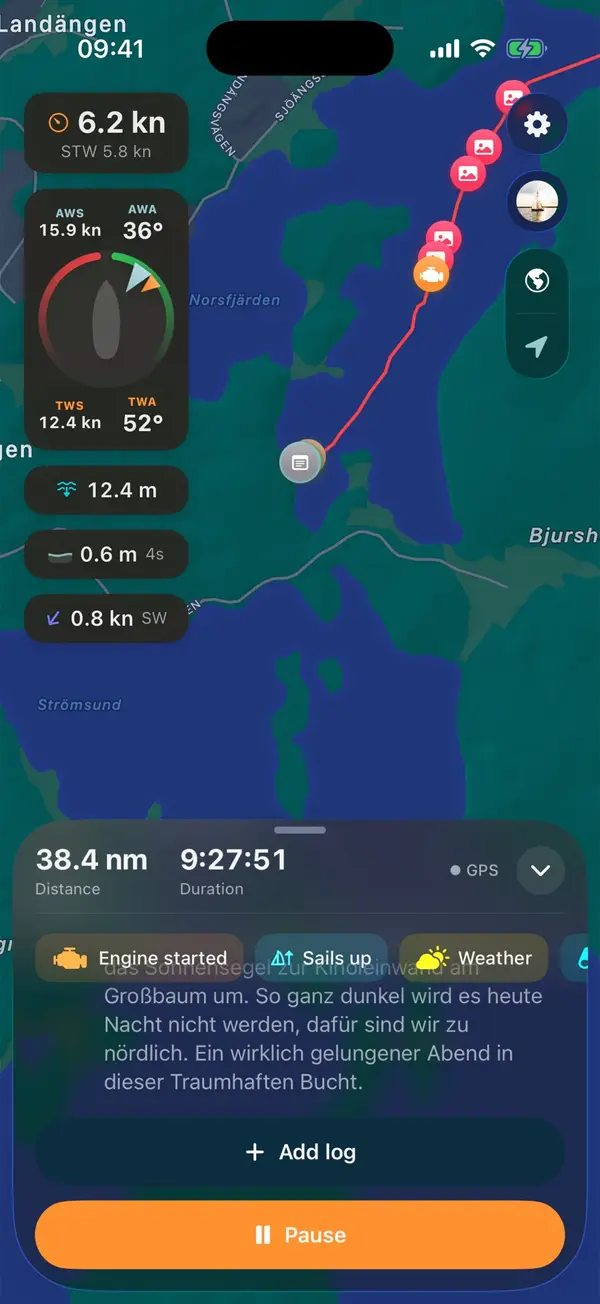
Manta logs tacks automatically on sailboats with the engine off.
Manta does this for you
Automatic sailing logbook
A digital logbook that fills itself. Manta notices when you cast off, tack, gybe, drop anchor or moor, and writes it into your log by itself. Every automatic entry stays editable.