Both change the side the wind comes from. In a tack the bow turns through the wind, in a gybe the stern does. Here is how each works and when to use which.
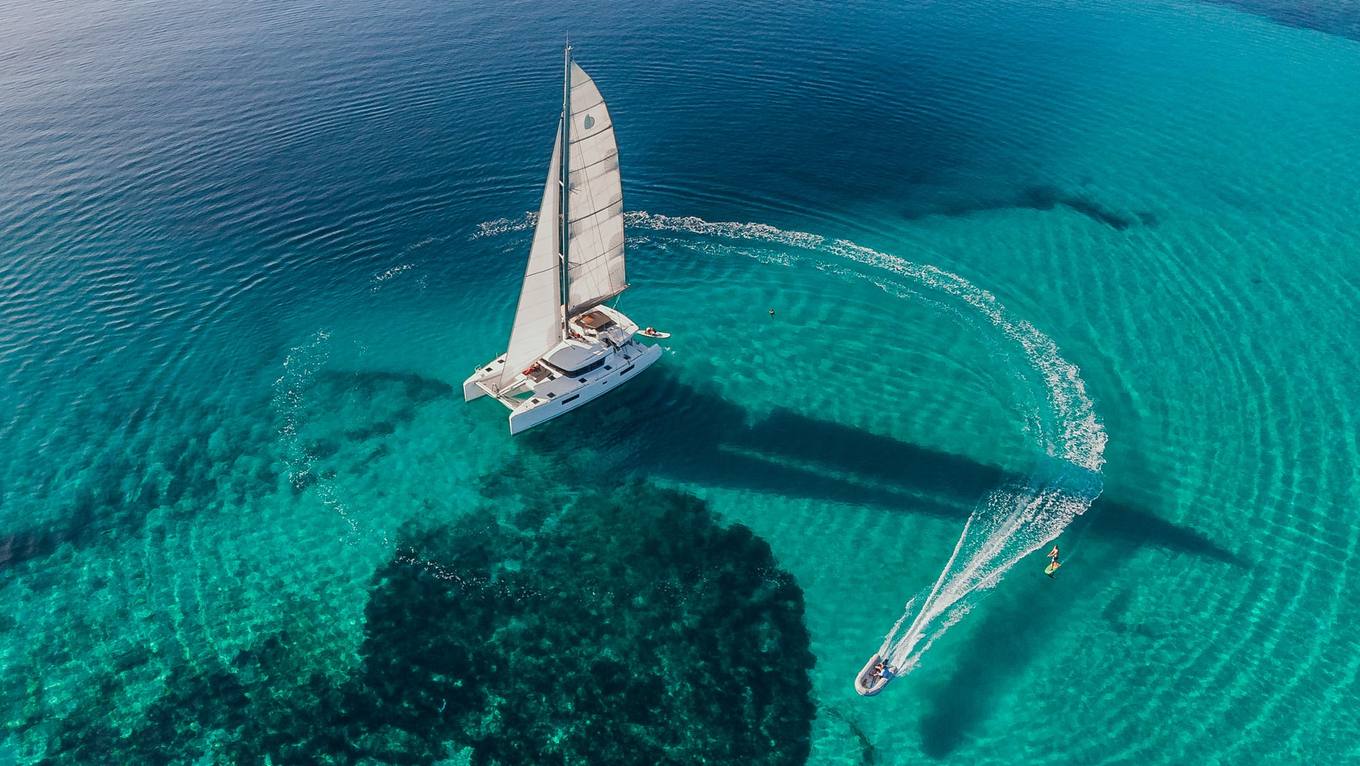
Tacking and gybing both move the wind from one side of the boat to the other. In a tack, you turn the bow through the wind; in a gybe, you turn the stern through the wind. You tack to make progress upwind, and gybe to change direction downwind. A tack is gentle because the sails flap through the turn; a gybe is more powerful because the boom swings across with the wind behind it.
Side by side
| Tack | Gybe | |
|---|---|---|
| What turns through the wind | The bow | The stern |
| Used when | Sailing upwind | Sailing downwind |
| Sails during the turn | Flap briefly, then fill on the new side | Stay full, then swing across |
| Boom | Moves across slowly | Swings across fast, so control it |
| Typical turn | About 80–100° | Often small, 20–60° |
| Risk | Losing speed, getting stuck head to wind | Uncontrolled boom, broaching |

How a tack works
- Check that the water on the new side is clear.
- Call "Ready about" and wait until the crew is ready.
- Call "Lee-oh" (or "Helm's a-lee") and steer up through the wind.
- Release the old jib sheet as the jib backs, and pull in the new one.
- Settle on the new close-hauled course and trim.
Commands vary between schools and boats. Agree on yours before you cast off.
How a gybe works
- Check that the water on the new side is clear and the crew's heads are below the boom.
- Call "Ready to gybe" and wait for the crew.
- Haul the mainsheet in so the boom has little room to swing.
- Call "Gybe-oh" and bear away until the wind crosses the stern and the boom comes over.
- Ease the mainsheet out quickly on the new side, steer to stop the boat rounding up, and trim the jib.
The unplanned gybe
On a run, a wave or a moment's inattention can put the wind behind the mainsail. The boom then crashes across without warning, hard enough to injure someone or damage the rig. Sail a few degrees off a dead run, keep an eye on the wind, and rig a preventer on longer downwind legs.
Tacks and gybes in your log
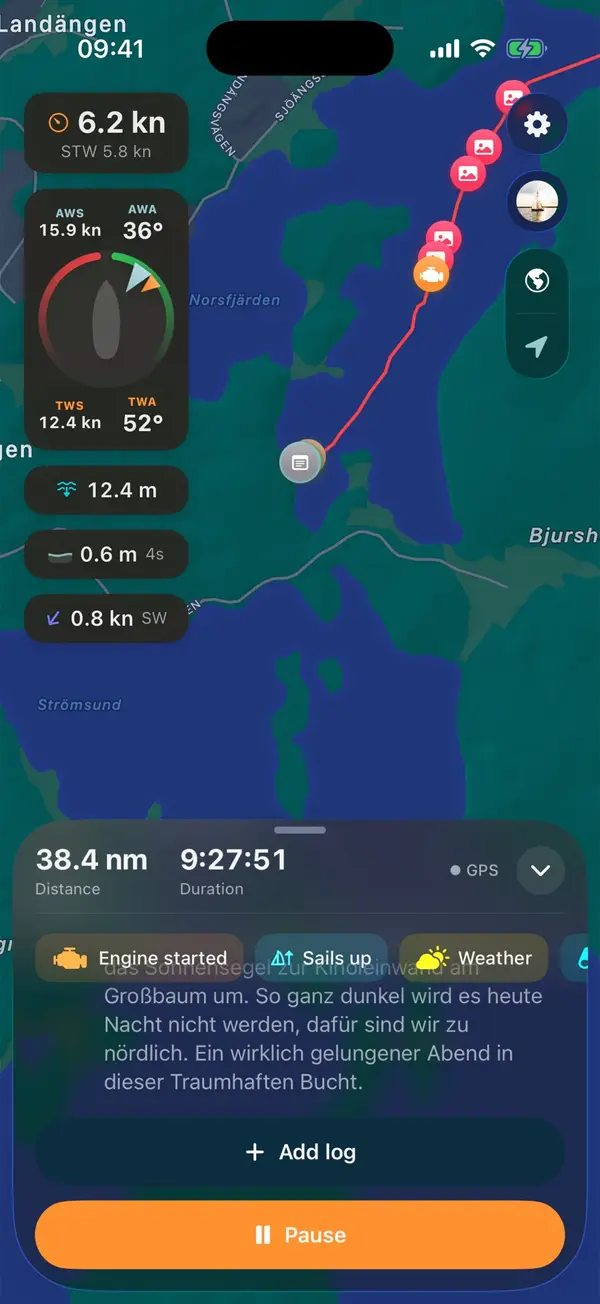
On a long beat, it's worth noting how many tacks you made, as it shows how hard the day was. Manta writes tacks and gybes into the log on its own when you sail with the engine off, so you don't have to count. Related terms: tack, gybe, and the points of sail.
Questions
Which is more dangerous, a tack or a gybe?
A gybe, especially an unplanned one. The boom swings across the whole cockpit with the full force of the wind behind it. A controlled gybe, with the mainsheet hauled in first, is safe.
What is a chicken gybe?
Instead of gybing in strong wind, you turn the other way, tack, and bear away onto the new course, a loop of roughly 270°. It takes longer and costs ground, but avoids the boom crashing across.
Why do I need to tack to go upwind?
No sailboat can sail straight into the wind. To reach a point upwind, you sail close-hauled on one side, tack, and sail close-hauled on the other, zigzagging towards it.
Manta does this for you
Automatic sailing logbook
A digital logbook that fills itself. Manta notices when you cast off, tack, gybe, drop anchor or moor, and writes it into your log by itself. Every automatic entry stays editable.