Close-hauled, beam reach, broad reach and running: the points of sail, the wind angles behind them and how to trim for each.
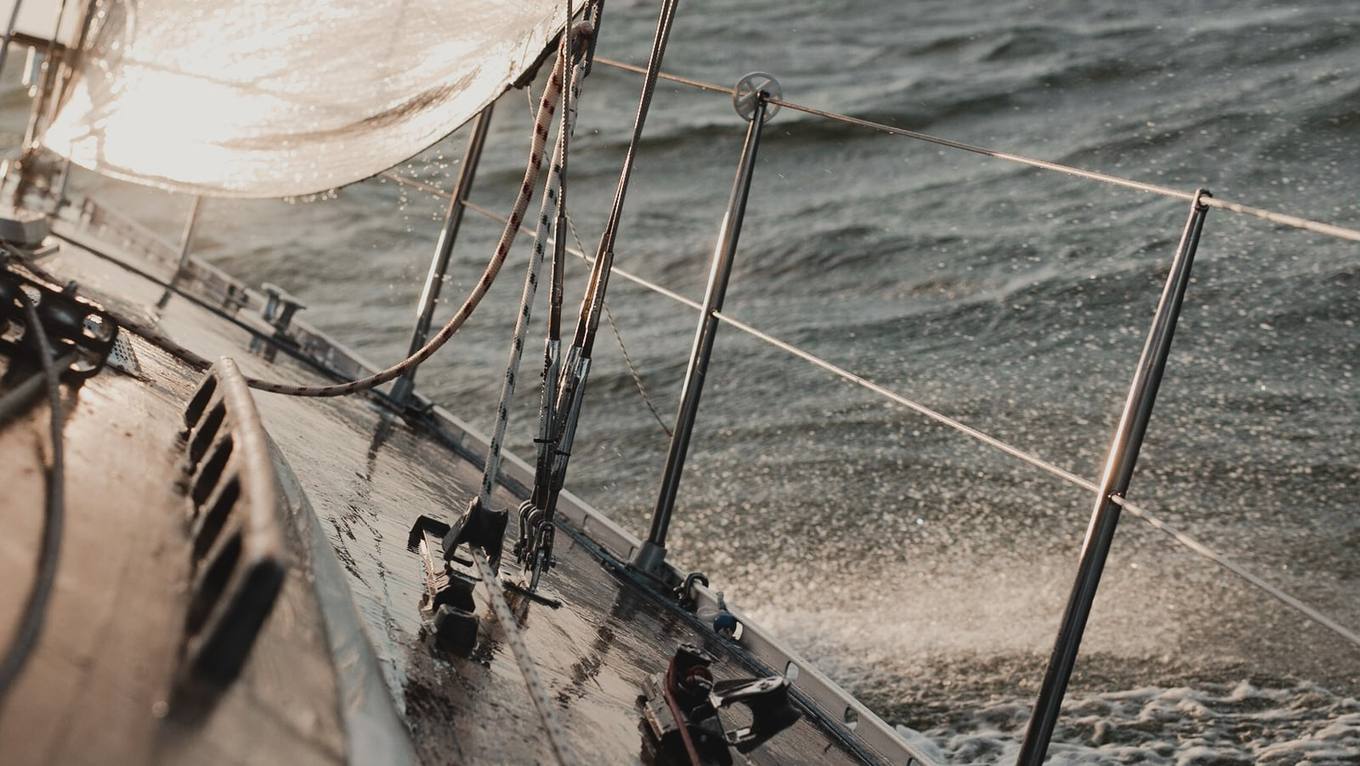
The points of sail describe your course relative to the wind. From closest to the wind to furthest away they are: close-hauled, close reach, beam reach, broad reach and running. Each one needs the sails trimmed differently. The closer to the wind, the tighter the sheets. Straight into the wind is the no-go zone, where no sailboat can sail.
The points of sail at a glance
| Point of sail | Angle to the true wind (approx.) | Sails |
|---|---|---|
| No-go zone | 0–40° | Flapping: the boat can't sail here |
| Close-hauled | 40–50° | Sheeted in hard |
| Close reach | 50–80° | Eased a little |
| Beam reach | about 90° | Eased about halfway |
| Broad reach | 110–160° | Eased well out |
| Running | 160–180° | All the way out, wind from astern |
The angles are typical for a cruising yacht. Every boat is a little different, and how close yours can sail is exactly what a polar diagram shows.

Close-hauled
As close to the wind as the boat sails well. The boat heels, the ride gets wetter, and you can't steer straight toward a destination upwind, so you zigzag towards it with tacks. Steer by the telltales on the jib: if the windward ones lift, you're too close to the wind.
Reaching
With the wind roughly from the side (close, beam or broad reach), most boats are at their fastest and easiest. Ease the sheets until the luff of the sails just starts to flutter, then pull them in a touch until it stops.
Running
With the wind from behind, the sails are out wide and push rather than pull. It feels calmer than it is: the apparent wind drops, and waves come from behind. Watch out for an unplanned gybe. If the wind gets behind the mainsail, the boom swings across hard. A preventer helps.
Port and starboard tack
On every point of sail except head-to-wind, you sail either on port tack (wind from the port side) or starboard tack (wind from the starboard side). It matters for the right-of-way rules between sailing boats. See also port and starboard.
Points of sail in the polar diagram
Which point of sail is your boat's best? Manta Pro builds your boat's polar diagram from the trips you sail and shows how well she performs on every point of sail.
Questions
How close to the wind can a sailboat sail?
Most cruising yachts sail about 40–45° off the true wind; racing boats a little closer. Inside that angle, the no-go zone, the sails just flap.
What is the fastest point of sail?
For most cruising boats, a beam reach or a broad reach. Fast, light boats can be quickest even further downwind, because they create so much apparent wind of their own.
Which point of sail is the most comfortable?
A broad reach usually. The boat heels little and moves with the waves. Close-hauled is wetter and heels more; a dead run can roll.
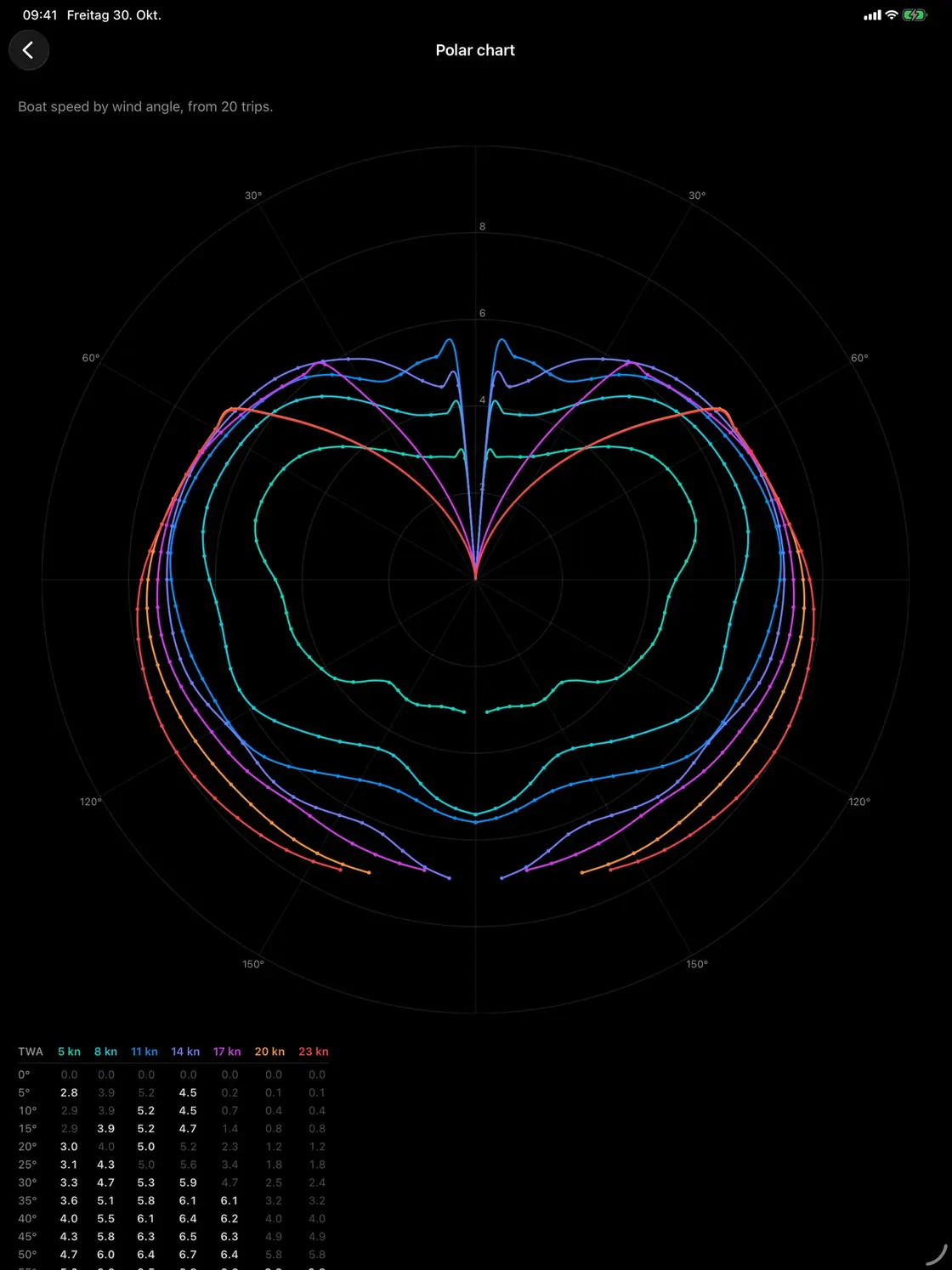
Manta does this for you
Sailing polar diagrams from your own trips Pro
Manta builds your boat's polar diagram from the trips you sail and shows how well she performs on every point of sail.