Turning the stern of a sailboat through the wind, so the wind comes from the other side and the boom swings across.
To gybe (American: jibe) is to turn a sailboat's stern through the wind. Like a tack, it brings the wind to the other side, but from behind, with the sails full of wind. The boom swings across the whole cockpit, which makes the gybe the manoeuvre that needs more care.
A controlled gybe
- "Ready to gybe!" The crew prepares the sheets; the mainsheet is hauled in so the boom can't swing far.
- "Gybe-oh!" The helm turns the stern through the wind, the boom comes across under control, and the mainsheet is eased out on the new side.
Keep heads low, and in strong wind keep the movement small and controlled.
The accidental gybe
When running dead downwind, a wave or a small steering error can bring the wind onto the other side of the mainsail unexpectedly. The boom slams across with full force, dangerous for heads and the rig. A preventer, a line holding the boom forward, stops that from happening.
In strong wind some crews avoid the gybe altogether and turn the long way round, through a tack. More in the guide tack vs gybe.
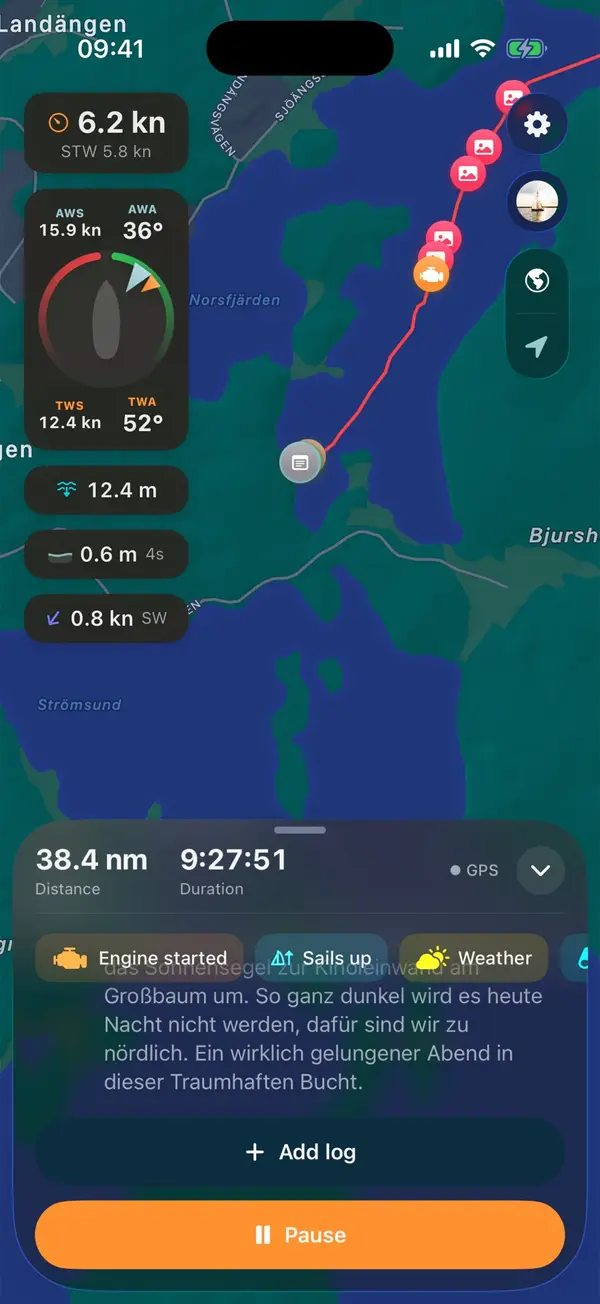
Manta logs gybes automatically on sailboats with the engine off.
Manta does this for you
Automatic sailing logbook
A digital logbook that fills itself. Manta notices when you cast off, tack, gybe, drop anchor or moor, and writes it into your log by itself. Every automatic entry stays editable.