The full Beaufort wind scale from 0 to 12 with wind speeds in knots, typical sea and wave heights, and what each force means on a sailing boat.
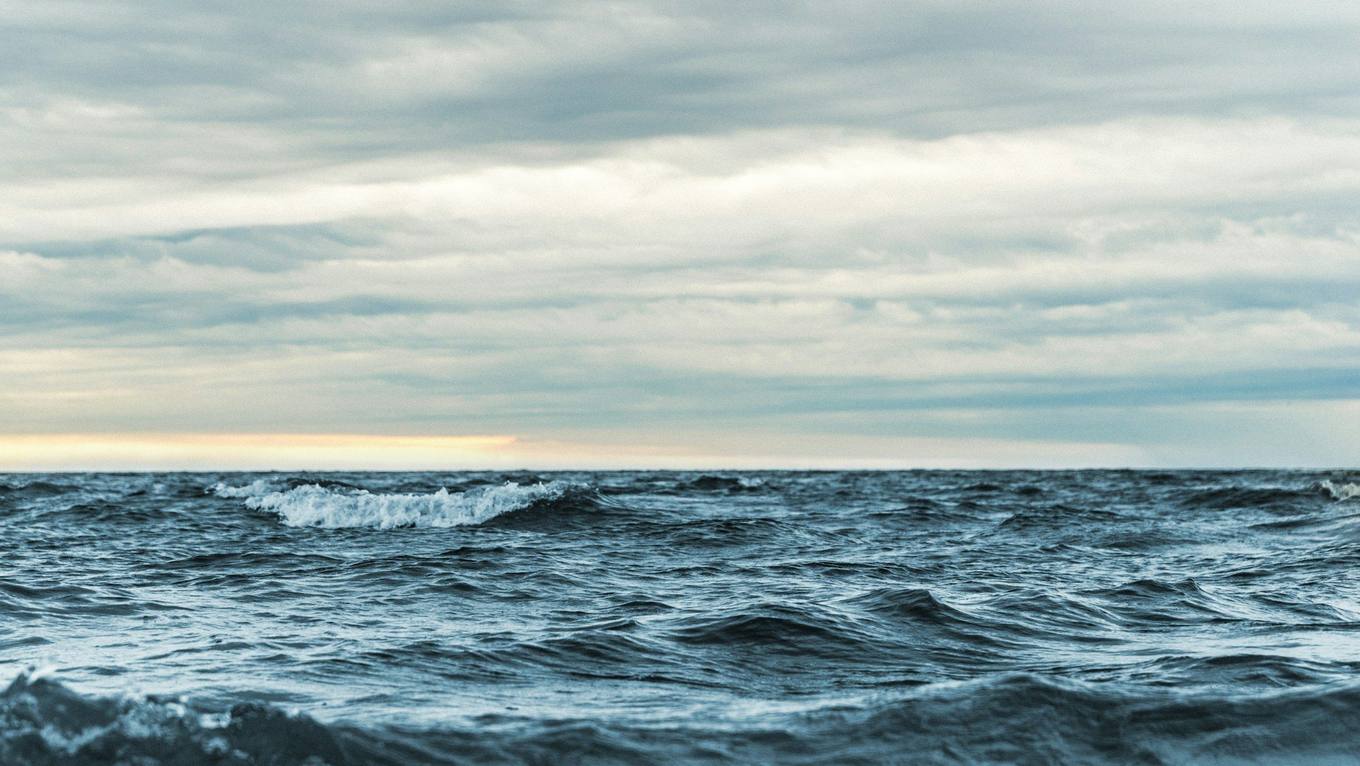
Photo: Ant Rozetsky, Unsplash
The Beaufort scale describes wind strength in 13 steps, from force 0 (calm, under 1 knot) to force 12 (hurricane, 64 knots and more). Sailors use it because each force goes with a recognisable sea state: you can estimate the wind just by looking at the water. Forecasts for sailors still give wind in Beaufort, often alongside knots.
The Beaufort scale
| Force | Description | Knots | Sea | Probable wave height |
|---|---|---|---|---|
| 0 | Calm | < 1 | Sea like a mirror | 0 m |
| 1 | Light air | 1–3 | Ripples, no crests | 0.1 m |
| 2 | Light breeze | 4–6 | Small wavelets, crests don't break | 0.2 m |
| 3 | Gentle breeze | 7–10 | Large wavelets, scattered white horses | 0.6 m |
| 4 | Moderate breeze | 11–16 | Small waves, fairly frequent white horses | 1 m |
| 5 | Fresh breeze | 17–21 | Moderate waves, many white horses, some spray | 2 m |
| 6 | Strong breeze | 22–27 | Large waves, extensive foam crests | 3 m |
| 7 | Near gale | 28–33 | Sea heaps up, foam blown in streaks | 4 m |
| 8 | Gale | 34–40 | Moderately high waves, crests break into spindrift | 5.5 m |
| 9 | Strong gale | 41–47 | High waves, dense foam, spray affects visibility | 7 m |
| 10 | Storm | 48–55 | Very high waves, sea looks white | 9 m |
| 11 | Violent storm | 56–63 | Exceptionally high waves | 11.5 m |
| 12 | Hurricane | ≥ 64 | Air filled with foam and spray, sea completely white | 14 m + |
Wind speeds are the WMO values for the mean wind at 10 m height. Wave heights are typical for the open sea, far from land. They are a guide, not a measurement.
What it means on board
These are rough guides for a typical cruising yacht; your boat, crew and sea area matter more than any table.
- Force 0–2: drifting to gentle sailing. Light-wind sails or the engine.
- Force 3–4: ideal sailing for most boats and crews.
- Force 5: lively. Time to think about the first reef, especially upwind.
- Force 6: strong. Most cruising boats are reefed; harbour entrances and wind against tide get serious.
- Force 7 and above: heavy weather. Experienced crews in seaworthy boats only. Better still, stay in port.
Beaufort and true wind
The scale describes true wind. Sailing upwind, the wind you feel is stronger; downwind it feels weaker. Before reefing or logging the wind, think in true wind. See True vs apparent wind.
Sea state as a separate scale
Wind and waves don't always match: swell from a distant storm can roll in on a calm day. Sea state has its own scale, the Douglas sea scale, explained in Sea state and waves.
Wind in your log
Manta shows wind, sea state and weather for every hour of a trip. Where your instruments are silent, Apple Weather fills the gaps. A one-line definition is also in the glossary: Beaufort scale.
Questions
How many knots is force 6?
Force 6, a strong breeze, is 22–27 knots. It is often called the yachtsman's gale, and most cruising boats are well reefed by then.
Does the Beaufort scale include gusts?
No. Beaufort describes the mean wind, averaged over about ten minutes. Gusts can be one or two forces higher, so check the forecast's gust values separately.
Why does the sea look different from the table?
The wave heights are for the open sea, with wind blowing long enough over a long stretch of water. Near the coast or soon after the wind picks up, waves are lower; with wind against current, they are shorter and steeper.
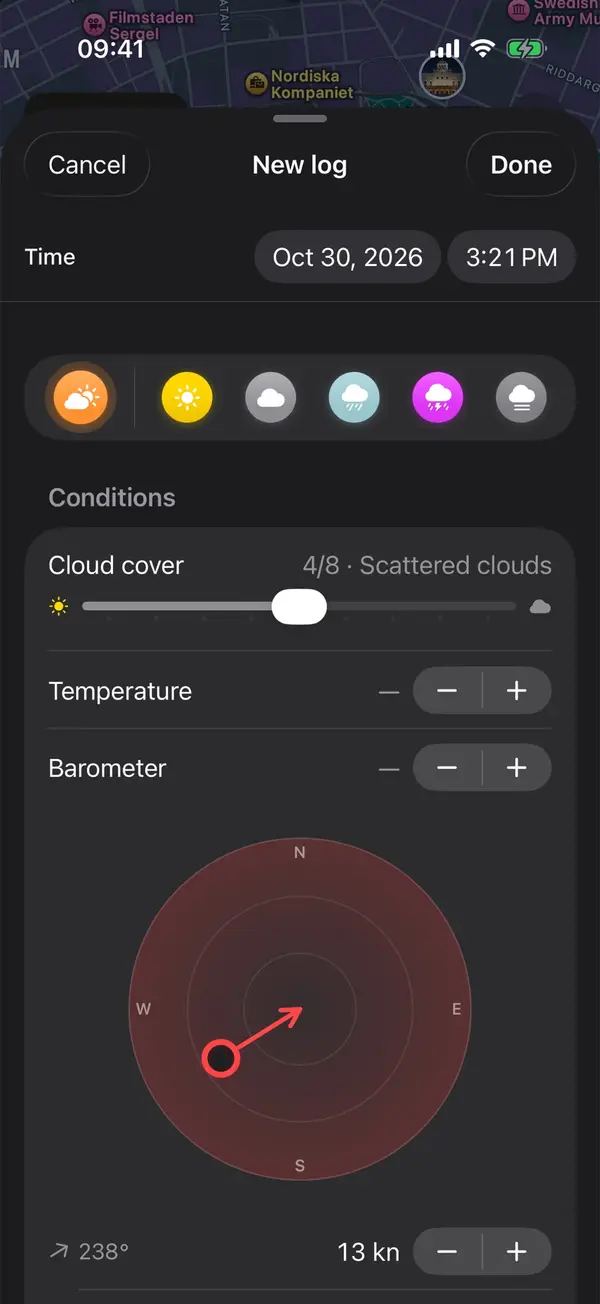
Manta does this for you
Weather log for every sailing trip
Every trip shows wind, sea state and weather for each hour. Where your instruments are silent, Apple Weather fills the gaps.