What a sailing logbook is for, what goes into it and how often to write, with a simple routine that works on day trips and long passages alike.
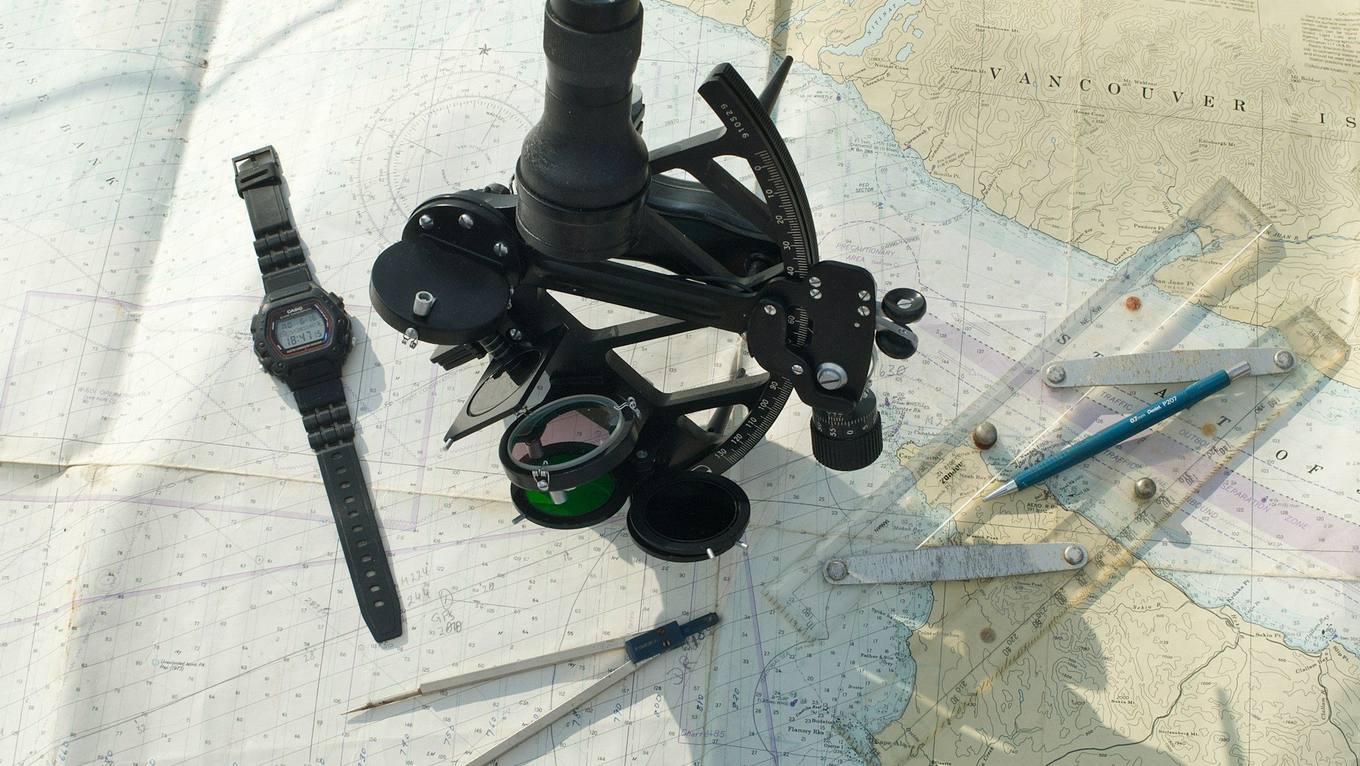
Photo: Stephan de Maranthi, Unsplash
A sailing logbook is the running record of your trip: when you left, where you were, how you sailed and what happened on the way. Keep it by writing a short entry at every departure, arrival and change, plus a regular line (hourly on longer passages) with time, position, course, speed and weather. That is all it takes.
Why keep a logbook
- Navigation: your last logged position, course and speed let you work out where you are if the electronics fail.
- Safety: a record of weather, barometer and events shows trends early and helps others if you need assistance.
- Proof: sea miles for a licence, engine hours for the service, and the facts after an incident or insurance claim.
- Memory: years later, it tells you where you anchored on that perfect evening.
When to write
| Moment | What to note |
|---|---|
| Before casting off | Crew, weather forecast, barometer, engine hours, tanks |
| Departure | Time, harbour, log reading |
| Every hour on passage | Time, position, course, speed, wind, weather |
| Every change | Sails set or reefed, engine on or off, course change, tack or gybe |
| Anything unusual | Sightings, problems, incidents, help given or received |
| Arrival | Time, harbour or anchorage, distance sailed, engine hours |
On a short coastal day sail, departure, arrival and the changes in between are often enough. Offshore, and at night, the hourly line matters most.
What to write
Keep each line short and factual: time first, then numbers, then a few words. The details (position, course, wind, barometer, engine and events) are in What to write in a logbook.
| Time | Position | Course | Speed | Wind | Baro | Remarks |
|---|---|---|---|---|---|---|
| 09:10 | Burgstaaken | – | – | SW 3 | 1016 | Cast off, engine on |
| 09:35 | 54°24.6′N 011°13.0′E | 180° | 5.2 kn | SW 3 | 1016 | Sails up, engine off |
| 11:00 | 54°22.1′N 011°05.4′E | 245° | 6.1 kn | W 4 | 1014 | Rain shower, good visibility |
| 12:20 | 54°20.4′N 010°59.2′E | 250° | 6.6 kn | W 5 | 1013 | First reef in the main |
| 12:50 | 54°22.6′N 010°59.8′E | 015° | 4.8 kn | W 5 | 1012 | Sails down, engine on |
| 13:05 | Heiligenhafen | – | – | W 5 | 1012 | Moored, engine off |
Consistent entries
- Use one time reference for the whole trip and say which one (local time or UTC).
- Write positions the same way every time, for example 54°26.3'N 011°11.8'E.
- Note true or magnetic courses consistently.
- Correct mistakes by crossing them out, not by erasing. A log you can trust is worth more than a neat one.
Paper or app
Both work. Paper never runs out of battery; a logbook app records the track and many entries on its own. Manta, for example, logs departure, arrival, tacks, gybes and anchoring automatically and leaves the rest to one or two taps. The honest comparison is in Digital vs paper logbook.
Questions
Is a logbook required on a private sailing boat?
That depends on your country, your flag and how the boat is used. Even where it isn't required, a logbook is good seamanship. It helps you navigate, and it is your record if something goes wrong or you need to prove your sea miles.
How often should I write in the logbook?
At every departure and arrival, at every change of course, sails or engine, and at least once an hour on longer passages. On a watch system, a line at every watch change is a good habit.
Who should keep the logbook?
The skipper is responsible for it. On board, whoever is on watch usually writes the entries, and the skipper checks and signs the day.
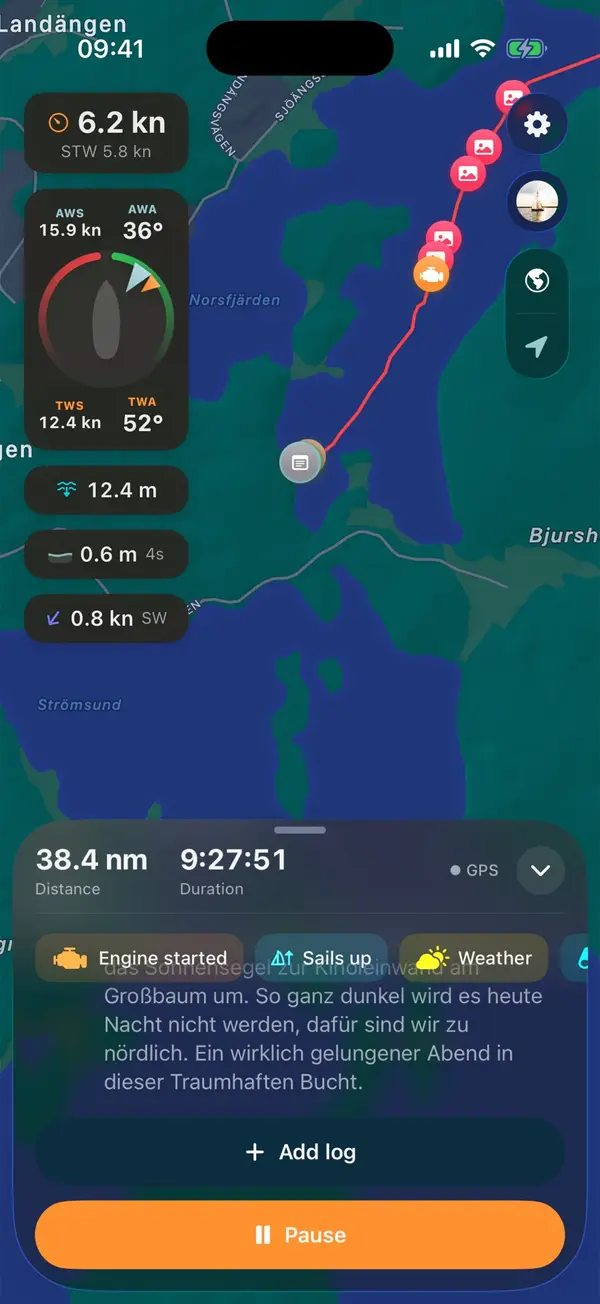
Manta does this for you
Automatic sailing logbook
A digital logbook that fills itself. Manta notices when you cast off, tack, gybe, drop anchor or moor, and writes it into your log by itself. Every automatic entry stays editable.