Reducing the area of a sail so the boat stays under control as the wind gets stronger.
Reefing means making a sail smaller. As the wind increases, a full sail overpowers the boat: it heels too much, gets hard to steer and slows down. A reefed sail gives less power, and the boat sails more upright, more comfortably and often faster.
Ways to reef
- Slab reefing (jiffy reefing): the mainsail is lowered partway and the reef tack and clew are pulled down to the boom. Most mainsails have two or three rows of reef points: first, second and third reef.
- In-mast or in-boom furling: the mainsail rolls into the mast or the boom, continuously variable.
- Roller-furling headsail: the jib or genoa rolls around its forestay to any size.
When to reef
The old rule: reef the first time you think about it. It's much easier before the wind arrives than in the middle of a gust. Points to remember:
- Check the true wind before turning upwind. On a run the wind feels lighter than it is.
- Reef before nightfall or before a forecast front.
- Shaking out a reef when the wind drops is quick; putting one in late is not.
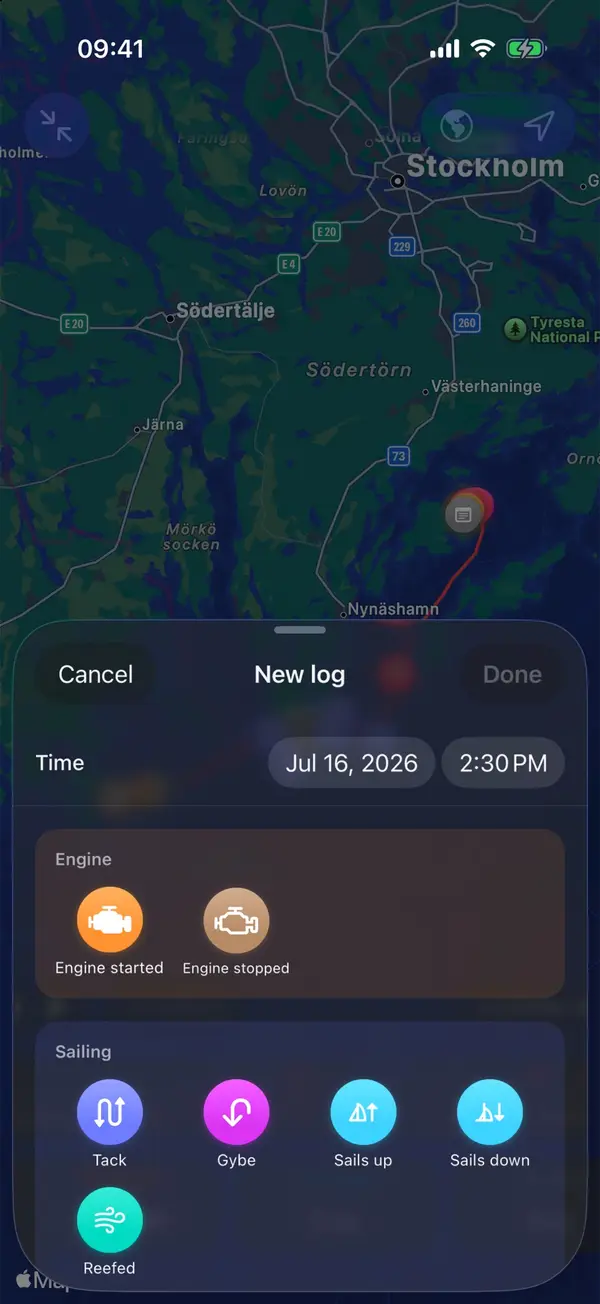
In Manta, a sail change is a quick entry, and each boat keeps its own sails and reefs.
Manta does this for you
Log entries in one or two taps while sailing
Weather, sail changes, sightings, notes and photos take one or two taps. The buttons adapt to the moment, so the right one is always at hand.