Why engine hours matter on a sailing boat (service, fuel, resale) and a simple way to keep track of them in your logbook.
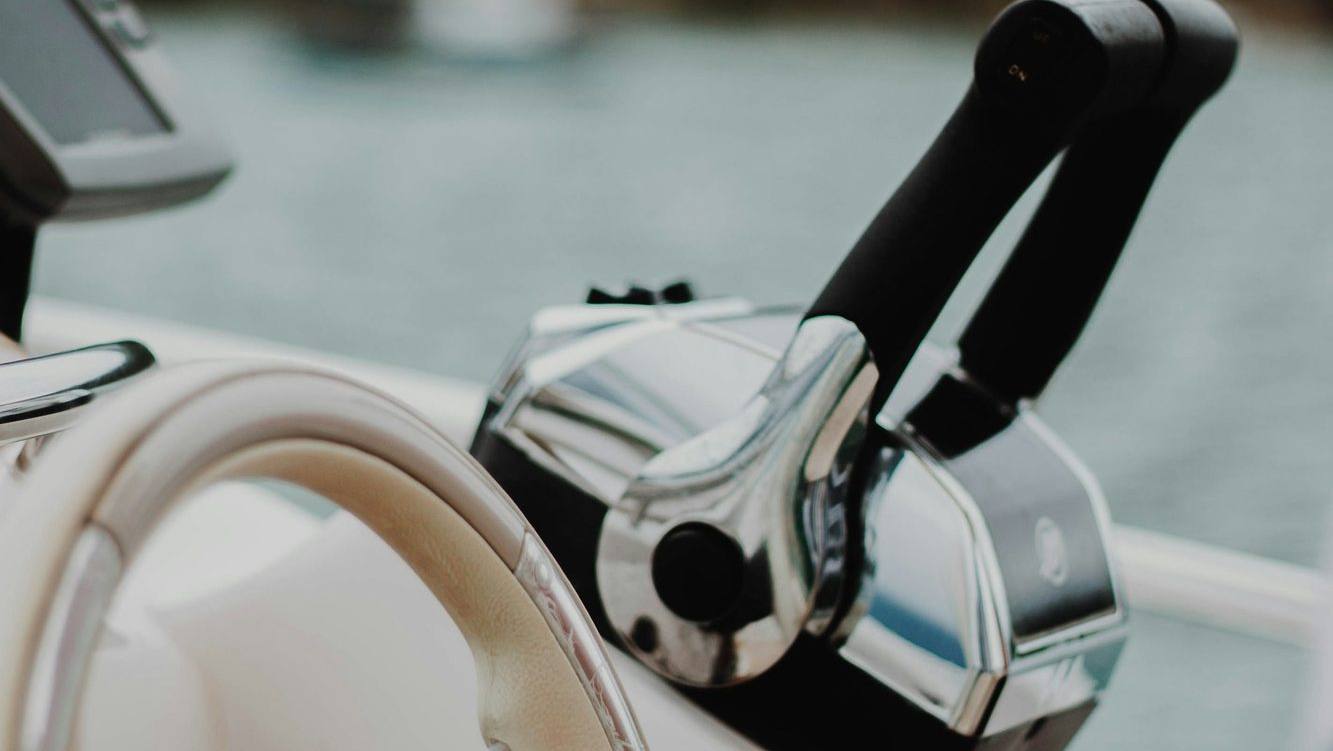
Photo: Isabela Kronemberger, Unsplash
Log engine hours by writing down the hour meter reading when you start and stop the engine, or at least at the start and end of each day, plus the time of every engine on and off. That gives you running time per trip, total hours for service intervals, and real fuel consumption, and it shows how much of a trip you actually sailed.
Why it matters on a sailboat
- Service intervals. Oil, filters, impeller and belts are due after a set number of hours or a set time. Without a record, you are guessing.
- Fuel planning. Litres used divided by hours run gives your real consumption, the number that tells you how far a full tank will take you.
- Diagnosis. A change in consumption or temperature is easier to spot against a record.
- Resale and warranty. A documented history is worth money when you sell, and may be asked for in a warranty case.
- Sailing vs motoring. It is satisfying, and sometimes sobering, to see how many hours you motored.
Logging engine hours
| When | What to note |
|---|---|
| Before departure | Hour meter reading, fuel level |
| Engine on | Time |
| Engine off | Time |
| End of day | Hour meter reading |
| Refuelling | Litres taken on, hour meter reading |
Write engine on and off in the main log along with your other entries. Keep a separate maintenance page with hours and date for every oil change, filter, impeller and belt.
Working out consumption
After refuelling to full: litres taken on ÷ hours since the last full tank = litres per hour. Do it a few times; consumption depends on revs, sea state and a clean hull, so the average is what counts.
Automatic engine detection
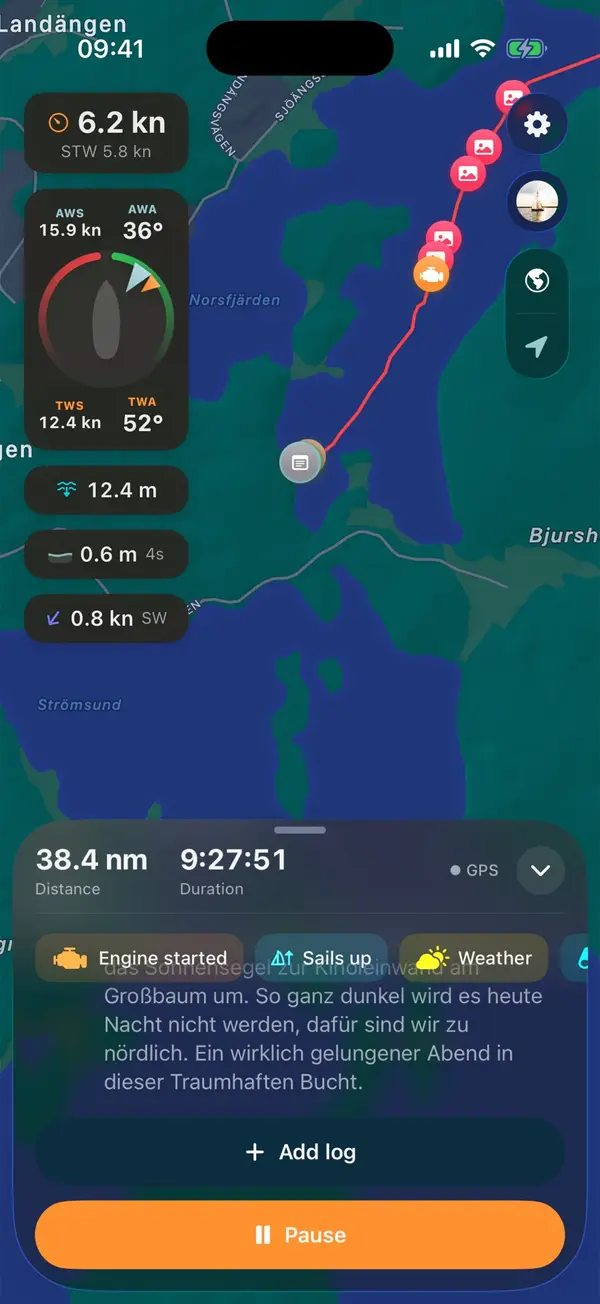
The easy part to forget is the time the engine went on or off, especially for a quick burst to get through a harbour entrance. Manta notices it on its own: from your instruments when they report the engine, otherwise your iPhone senses the hull's vibration and, together with speed and course, writes engine on and off into the log with no wiring. The boat's engine hours in Manta count up with every run. You still read the hour meter yourself, but the runs in between are there.
The rest of a good log entry is in What to write in a logbook.
Questions
How often does a sailboat diesel need servicing?
Your engine's manual gives the intervals, usually in engine hours plus a time limit such as once a year, whichever comes first. Many sailing boats reach the yearly limit long before the hours.
My engine has no hour meter. What now?
Log engine on and off with the time and add up the runs. It is less precise than a meter but good enough for service intervals and fuel planning. A retrofit hour meter is also cheap.
Does running the engine in harbour count?
Yes. Engine hours measure running time, not distance. Charging the batteries at anchor wears the engine too, and idling for long periods is hard on a diesel.
Manta does this for you
Automatic engine detection for sailboats
Manta reads the engine from your boat's instruments. Without them, your iPhone senses the hull's vibration and, together with speed and course, tells Manta when the engine runs. No wiring needed.