The water depth between the bottom of the keel and the seabed, which is how much water you really have under the boat.
Depth below keel (DBK) is the distance from the lowest point of the keel to the seabed. It answers the question that matters most when approaching shallow water: how much room is left before you touch bottom?
Three ways to show depth
The depth sounder's transducer sits somewhere in the hull, neither at the waterline nor at the bottom of the keel. What it measures is the depth below transducer. An offset turns that into something useful:
| Display | Offset | Shows |
|---|---|---|
| Below transducer | none | raw measurement |
| Below keel | negative (transducer to keel bottom) | water under the keel |
| Below surface | positive (transducer to waterline) | total water depth, comparable to the chart plus tide |
Find out which one your display shows. Mistaking depth below surface for depth below keel can put a deep-keeled boat aground.
In practice
- Charts give depths relative to the chart datum: in tidal waters usually the lowest astronomical tide, in non-tidal seas such as the Baltic mean sea level. The actual depth adds the current tide or water level, which can also be below datum.
- Set a shallow-water alarm with a margin for waves and soundings that are out of date.
- In NMEA 0183 depth travels as DBT, DBK, DBS or DPT (depth plus offset), in NMEA 2000 as PGN 128267, also with an offset.
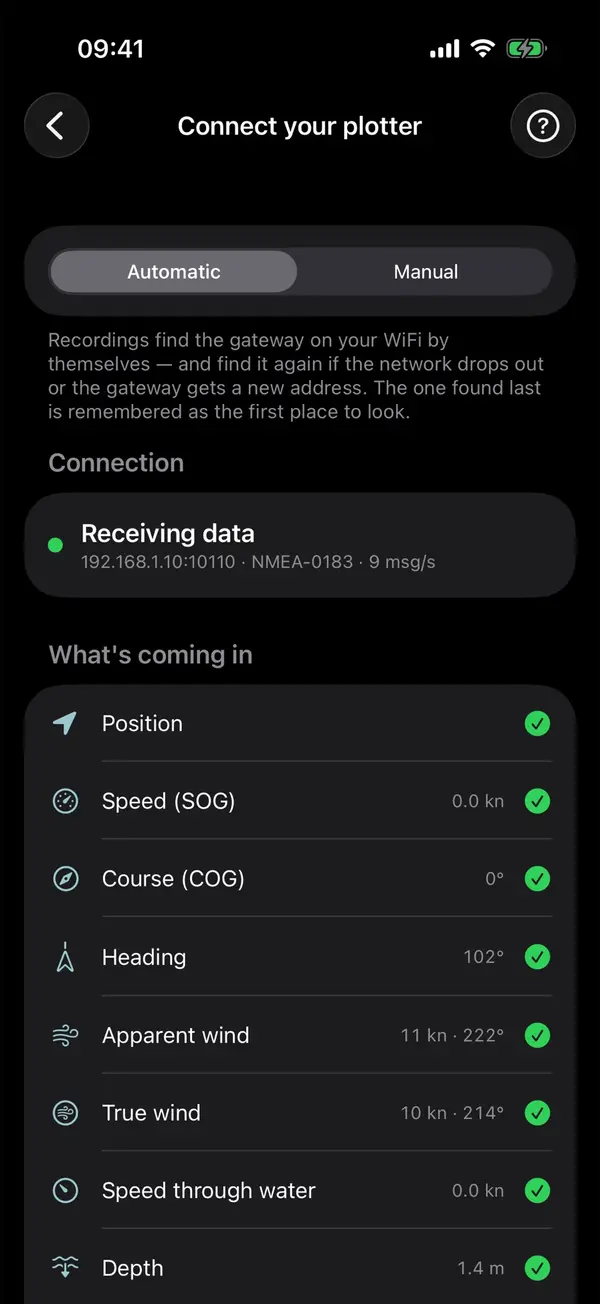
Manta does this for you
Plotter data on your iPhone over WiFi
Connect your plotter or a WiFi gateway, and Manta shows your instruments live and records wind, depth and speed through the water on every trip.