The two standards that carry wind, depth and speed around your boat, explained for sailors, and what they mean for getting that data onto a phone.
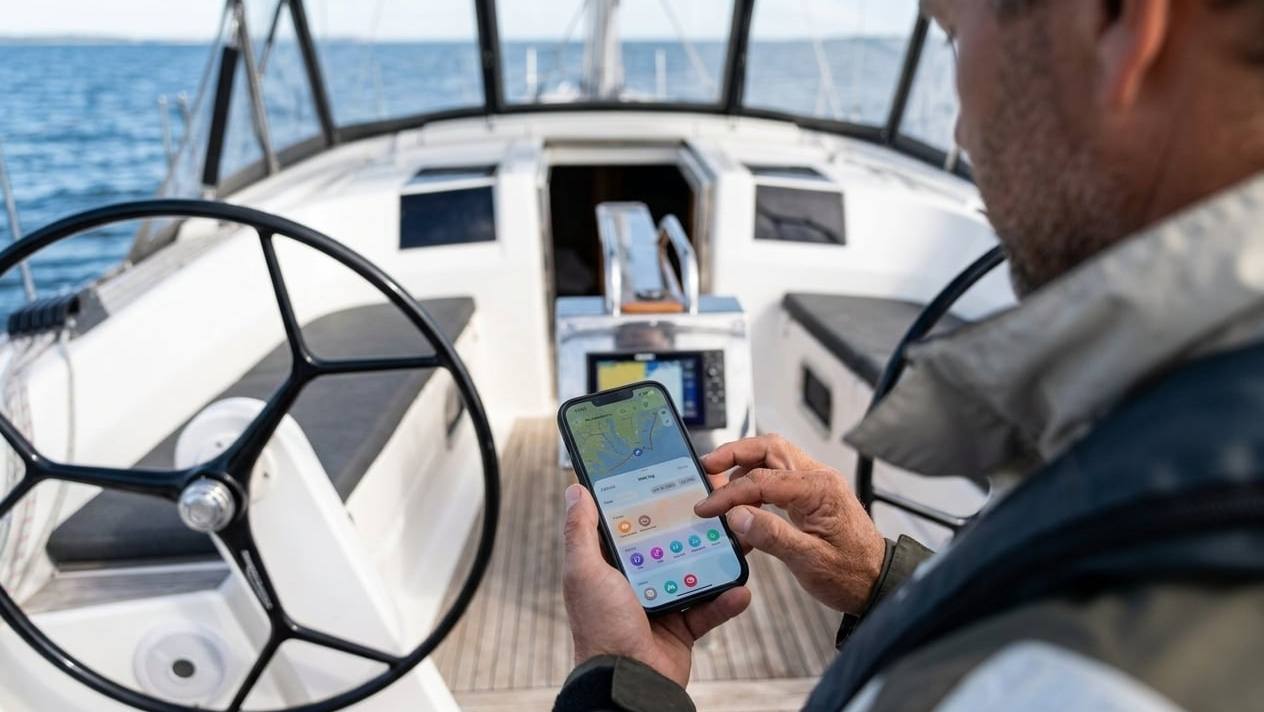
NMEA 0183 and NMEA 2000 are the two standards marine electronics use to share data such as position, wind, depth and speed. NMEA 0183 is the older one: simple wires from one device to the next. NMEA 2000 is a network: one cable along the boat that every device plugs into. Neither reaches a phone on its own. For that you need a plotter that streams over WiFi, or a WiFi gateway.
NMEA 0183
The older standard, around since the 1980s and still on many boats.
- Wiring: thin wires on screw terminals. One device talks, one or a few listen.
- Data: short lines of readable text, called sentences, one for wind, one for depth, one for position and so on.
- Limits: slow, and only one talker per line. To combine several instruments you need a multiplexer.
NMEA 2000
The newer standard, common on boats and instruments built in roughly the last fifteen to twenty years.
- Wiring: a backbone cable with a terminator at each end. Every device joins it with a T-piece and a drop cable, and the backbone also supplies power.
- Data: compact binary messages. All devices share the network and hear each other.
- Brand names: Raymarine calls its version SeaTalkng, Simrad used SimNet. They carry the same data with different plugs.

Which one does your boat have?
- Round, screw-on plugs, T-pieces and a terminator at the end of a cable: NMEA 2000 (or SeaTalkng, SimNet).
- Loose wires on screw terminals, often labelled NMEA, Data or Out + / −: NMEA 0183.
Many boats have both: newer instruments on NMEA 2000, an older VHF or autopilot on 0183. The manuals of your plotter and instruments tell you for sure.
What it means for your iPhone
Your phone has no NMEA socket, so the data has to travel over WiFi. There are two ways:
- A plotter that streams. Many B&G, Simrad and Lowrance displays put the data on WiFi themselves. See Connect your plotter.
- A WiFi gateway. It plugs into the network and puts the data on the air. Read What is an NMEA WiFi gateway.
Manta reads NMEA 0183, and NMEA 2000 in the Yacht Devices RAW format, over TCP or UDP. So both standards work. What matters is that your plotter or gateway sends one of those. With Manta Pro, every log entry then carries real wind, depth and speed through the water.
Questions
Is NMEA 2000 better than NMEA 0183?
For a new installation, usually yes. One cable carries everything, devices are easy to add, and it's much faster. For a handful of instruments, NMEA 0183 still does its job.
Can both run on the same boat?
Yes, and on many boats they do. Many plotters, multiplexers and gateways can take in both and pass data from one to the other.
What are SeaTalkng and SimNet?
Brand names for NMEA 2000 networks, SeaTalkng from Raymarine and SimNet from Simrad. They carry NMEA 2000 data but use their own plugs, so you need adapter cables to connect standard devices.
Does Manta work on an older boat with only NMEA 0183?
Yes. A gateway that streams NMEA 0183 over TCP or UDP brings the data to Manta Pro.
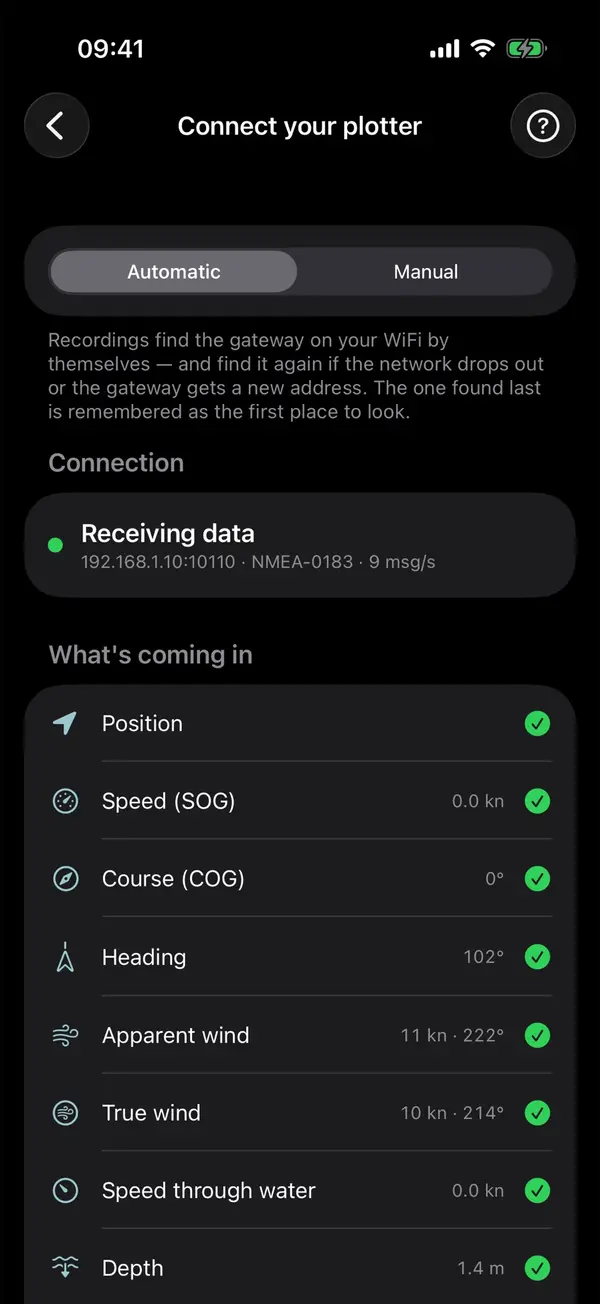
Manta does this for you
Plotter data on your iPhone over WiFi
Connect your plotter or a WiFi gateway, and Manta shows your instruments live and records wind, depth and speed through the water on every trip.